What Are High Voltage Batteries?
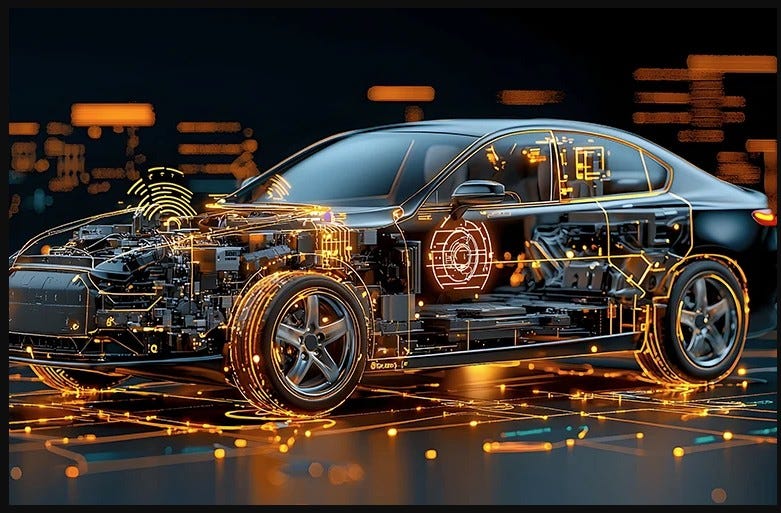
High-voltage batteries are advanced energy storage systems designed to operate at elevated voltage ranges (typically above 400 V), enabling high-power density and rapid discharge — making them ideal for electric vehicles (EVs), grid-scale storage, and industrial applications. Unlike low-voltage counterparts, they can support fast charging, long-duration storage, and heavy-duty performance while integrating seamlessly with smart-grid architectures.
Why Are High Voltage Batteries Crucial in Today’s Energy Landscape?
The global shift to renewable energy, ambitious carbon reduction goals, and demands from AI-driven data centers are pushing high voltage batteries to the forefront. Grid-level applications are booming — energy storage systems (ESS) grew by 52% from 2023 to 2024 and are projected to exceed 760 GWh by 2030, equivalent to powering 7.6 million EVs. High voltage systems are pivotal in balancing intermittent wind and solar generation, stabilizing grids, and enabling ultra-fast EV charging — all while reducing reliance on fossil fuels.
Who Benefits from High Voltage Battery Technology?
- EV manufacturers and consumers: Faster charge times, extended driving range, and enhanced performance.
- Utilities & grid operators: Voltage-rich storage for peak shaving, frequency regulation, and renewable firming.
- Commercial & industrial sectors: Backup power and load management for data centers, factories, and telecom infrastructure.
- Clean energy integrators & developers: Deployment across hybrid solar-wind-storage plants improves reliability and economics.
Where Are High Voltage Batteries Making the Most Impact?
- U.S. and China grid deployments: Texas added 5 GW of battery capacity last year.
- Victoria, Australia installed a 450 MWh/300 MW “Big Battery” using Tesla Megapacks.
- Nevada’s Redwood Energy repurposes 20 GWh of second-life EV batteries into stationary storage for AI data centers.
- Europe is approving projects like the massive Thorpe Marsh LFP installation, signaling market shift
When Did High Voltage Battery Adoption Take Off?
High voltage battery use has surged in the last 3–4 years, driven by:
- Steep cost declines: Lithium battery prices dropped 20% in 2024; China’s pack prices fell below $100/kWh
- Regulatory incentives like the U.S. Inflation Reduction Act and FERC Order 841 fostering storage deployment
- Rapid technology advancements enabling modular, scalable battery architectures across sectors.
How Are These Technologies Evolving?
1. Battery Chemistry Innovation
- LFP dominance: Lithium iron phosphate batteries now power a remarkable 90% of ESS capacity, displacing nickel and cobalt due to safety, cost, and supply issues.
- Sodium-ion emergence: CATL, BYD, and Altris are pushing sodium-ion systems toward commercialization by 2025–2027.
- Solid-state breakthroughs: Expect 30–50% higher energy density, faster charging, and ultra safety; commercial rollouts planned between 2025–2028.
- Flow & molten-salt utilities: Iron-air and sodium-sulfur batteries are reaching utility-scale pilot stages for multi-day storage needs.
2. Smart Battery Management Systems (BMS) AI-driven BMS are now standard: predictive maintenance, thermal runaway prevention, cell balancing, and IoT integration via cloud platforms.
3. Recycling & Second-Life Strategies Reusing EV batteries for stationary storage (like Redwood’s 12 MW/63 MWh site) and circular supply chains — recycling expected to grow from $12 B (2023) to $18 B by 2027.
4. Modular, Standardized Systems IEC-driven standardization ensures modular designs, with ~80% of storage units using unified platforms by 2025.
5. Supply Chain Diversification Manufacturers are securing critical minerals via partnerships and vertical integration across regions — China, North America, Europe, and India are all scaling gigafactories .
6. Integration with Smart Grids DSOs are using advanced grid-management software to form virtual power plants, optimizing dispatch for renewables and enhancing resilience.
What Are the Key Advantages of High Voltage Batteries?
- Rapid Charging & Discharging: Fast ramp-up supports grid inertia, frequency response, and EV fast-charging needs. Some systems charge in 5–10 minutes .
- High Energy Density: Solid-state and Li-S systems are enabling up to 50–100% more energy density.
- Extended Cycle Life: Advanced chemistries now support 6,000+ deep cycles, improving TCO by 30% .
- Enhanced Safety & Durability: LFP, solid-state, and sodium-ion batteries are inherently safer and more stable. AI-BMS reduces risk.
- Sustainability & Circularity: Emphasis on cobalt/nickel-free chemistries, recycling, and second-life applications reduce environmental impact.
Why Is 2025 a Turning Point?
Thanks to cost, policy, and performance gains, 2021–2024 saw U.S. grid storage grow fivefold to 26 GW. China dominates global capacity (~90%), but tariffs and ESG concerns are boosting production in South Korea, the U.S., and India. Investments like CATL’s 80 GWh Mexico plant (2025) and Northvolt’s 60 GWh Swedish gigafactory signify global expansion.
When Should Organizations Deploy High Voltage Batteries?
- EV rollouts to support fast-charging stations and fleet electrification.
- Grid balancing to manage renewable intermittency — deploy early for peak shaving and reserve power.
- Data centers & AI hubs, where second-life batteries (like Redwood’s) offer cost-effective resiliency.
- Renewable-plus-storage projects, especially hybrid solar-wind setups planning to commission by 2025.
How to Approach High Voltage Battery Projects
1. Choose Gas Chemistry Wisely Match LFP, sodium-ion, solid-state, or flow batteries to your power, duration, safety, and cost requirements.
2. Leverage Smart BMS & IoT Platforms Implement AI-enabled monitoring for safety, performance optimization, and predictive diagnostics.
3. Design for Modularity & Standards Use IEC-compliant modular units for future scalability and easier maintenance.
4. Plan for Lifecycle Management Incorporate second-life usage, recycling partnerships, and sustainable supply chain audits.
5. Work with Regulators & Grid Operators Tapping into incentives (IRA, FERC 841, EU directives) improves ROI and speeds deployment.
6. Future-Proof Your Investment Stay alert to emerging chemistries (solid-state, Li-S, flow batteries) and evolving grid integration standards.
WH Summary: High Voltage Batteries
- What are they? Efficient, high-power storage systems above 400 V, ideal for EVs, grid, and industrial applications.
- Why do they matter now? Plummeting costs (<$100/kWh), grid resilience needs, and rapid rise of renewables.
- Who uses them? Utilities, EV producers, data centers, commercial/industrial operators, and renewables integrators.
- Where are they deployed? U.S., China, Australia, Europe, and expanding in India via hybrid projects.
- When are they key? 2023–2025 marks rapid global ramp-up, with the next phase focusing on circularity and emerging chemistries.
- How to implement? Select chemistry, use smart BMS, integrate modular/off-grid standards, and account for lifecycle and regulation.
Conclusion
High-voltage batteries are the keystone of decarbonization, enabling fast-charging EV networks, resilient grids, and sustainable industrial operations. Combining advanced chemistries — like LFP, sodium-ion, Solid state — with AI-powered management, modular design, and lifecycle thinking positions these systems as indispensable in the energy transition.
Between 2024 and 2030, global storage capacity is projected to soar past 500 GWh by 2025, with ARR projected to more than double by 2030. Companies investing now in high-voltage battery infrastructure will be Future Ready — competitive, compliant, and climate-resilient.


Comments
Post a Comment